Turnkey Project
→ Marais – Paris 75003 / France
Structural Intervention on a Duplex and Studio in a Listed Building
The client acquired a 105 m² apartment on the second floor and an independent studio on the third floor of a 16th-century building listed as a historic monument. Beyond optimizing space, the main design challenge lay in the structural intervention.
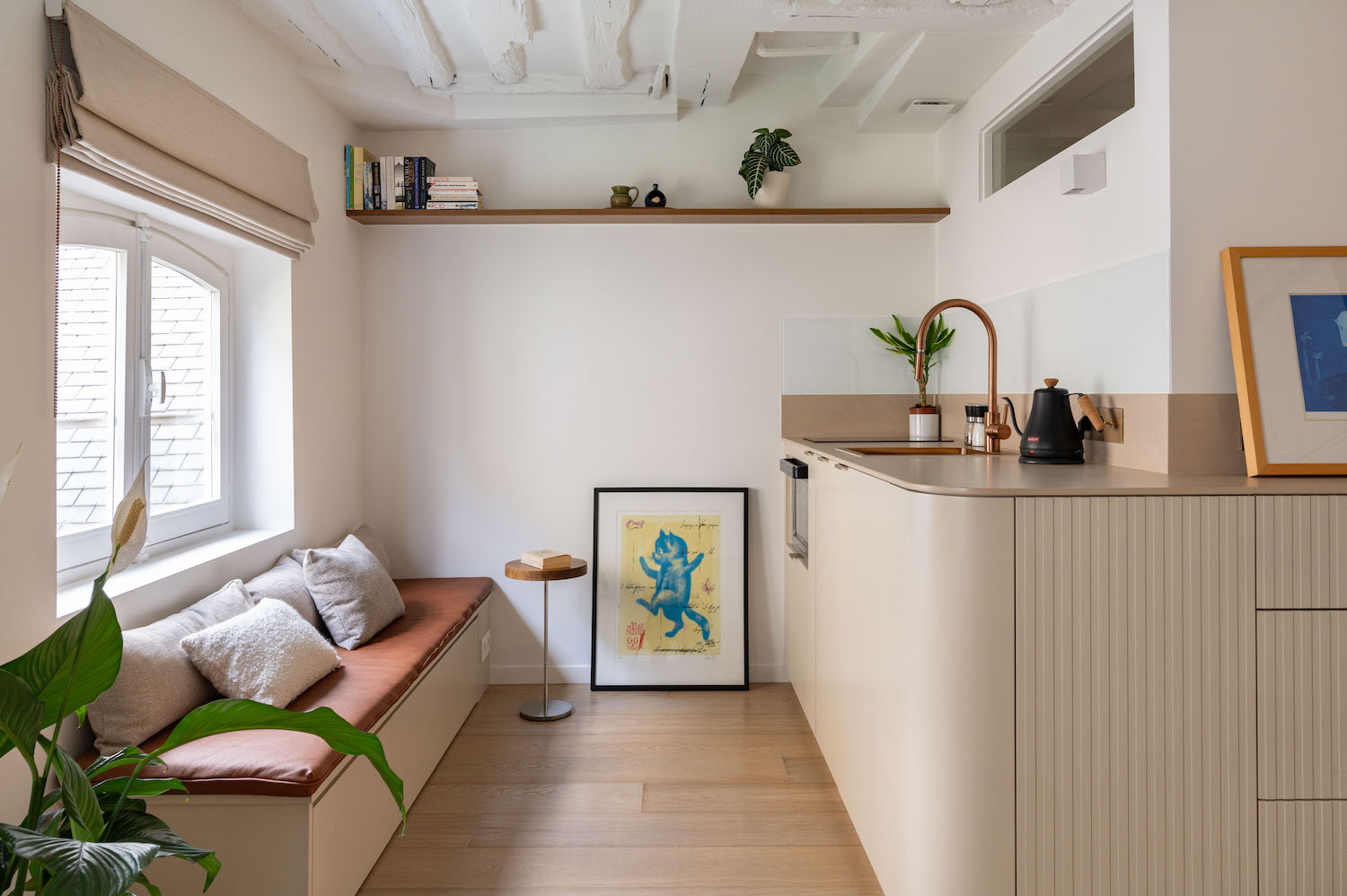
→ In the studio, it was necessary to gain ceiling height. Due to deformation of the ceiling beams, the height at the center of the room was only 1.80 meters. The floor slab was entirely replaced in order to achieve a final ceiling height of 2.15 meters.
→ The second structural modification consisted of creating an opening in the load-bearing wall between the mezzanine and this space.
→ Likewise, two load-bearing walls were completely removed in the apartment.
The first, located along the corridor, was a later addition to the original structure; it added unnecessary weight and posed a risk to the building’s stability.
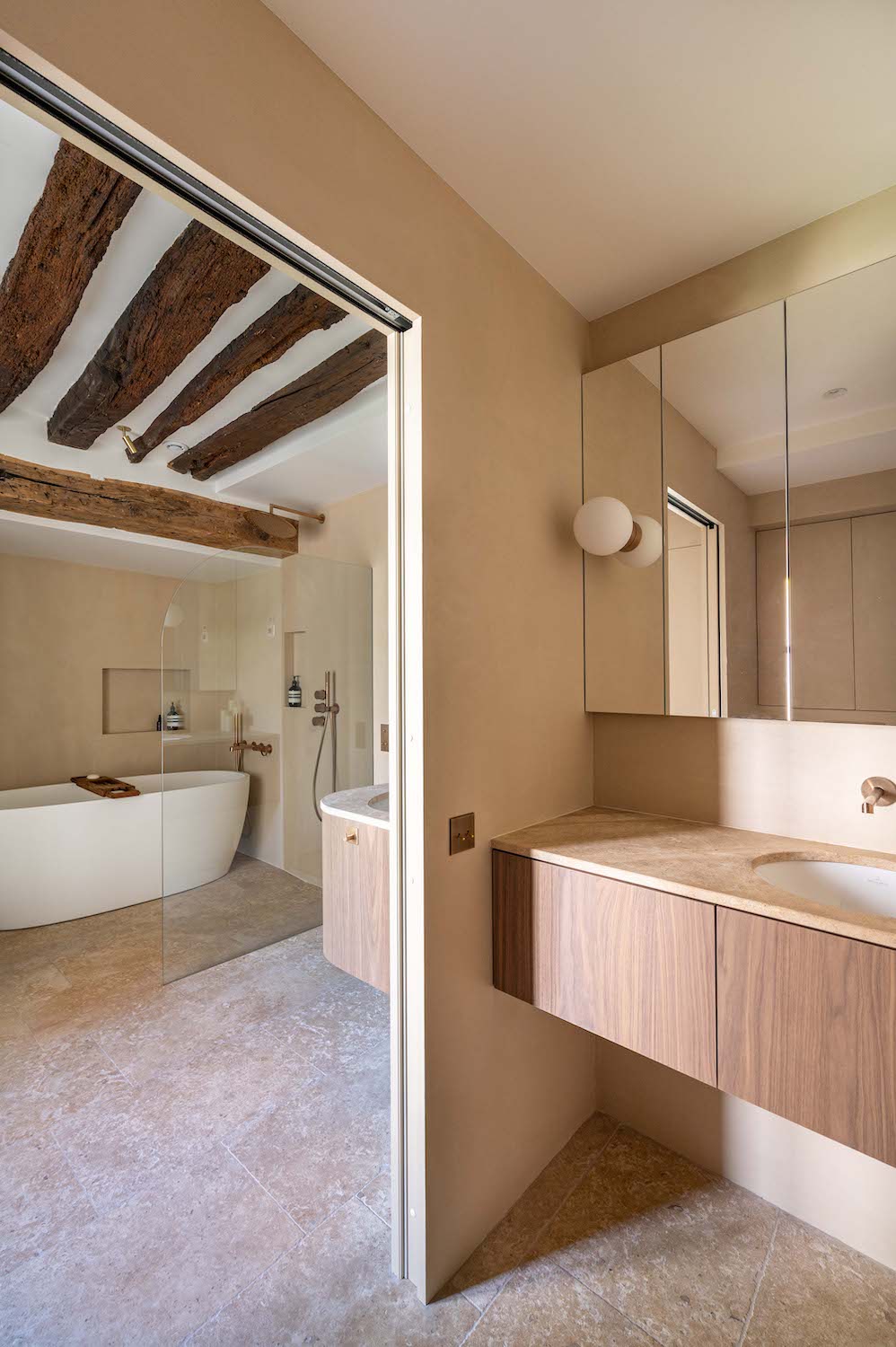
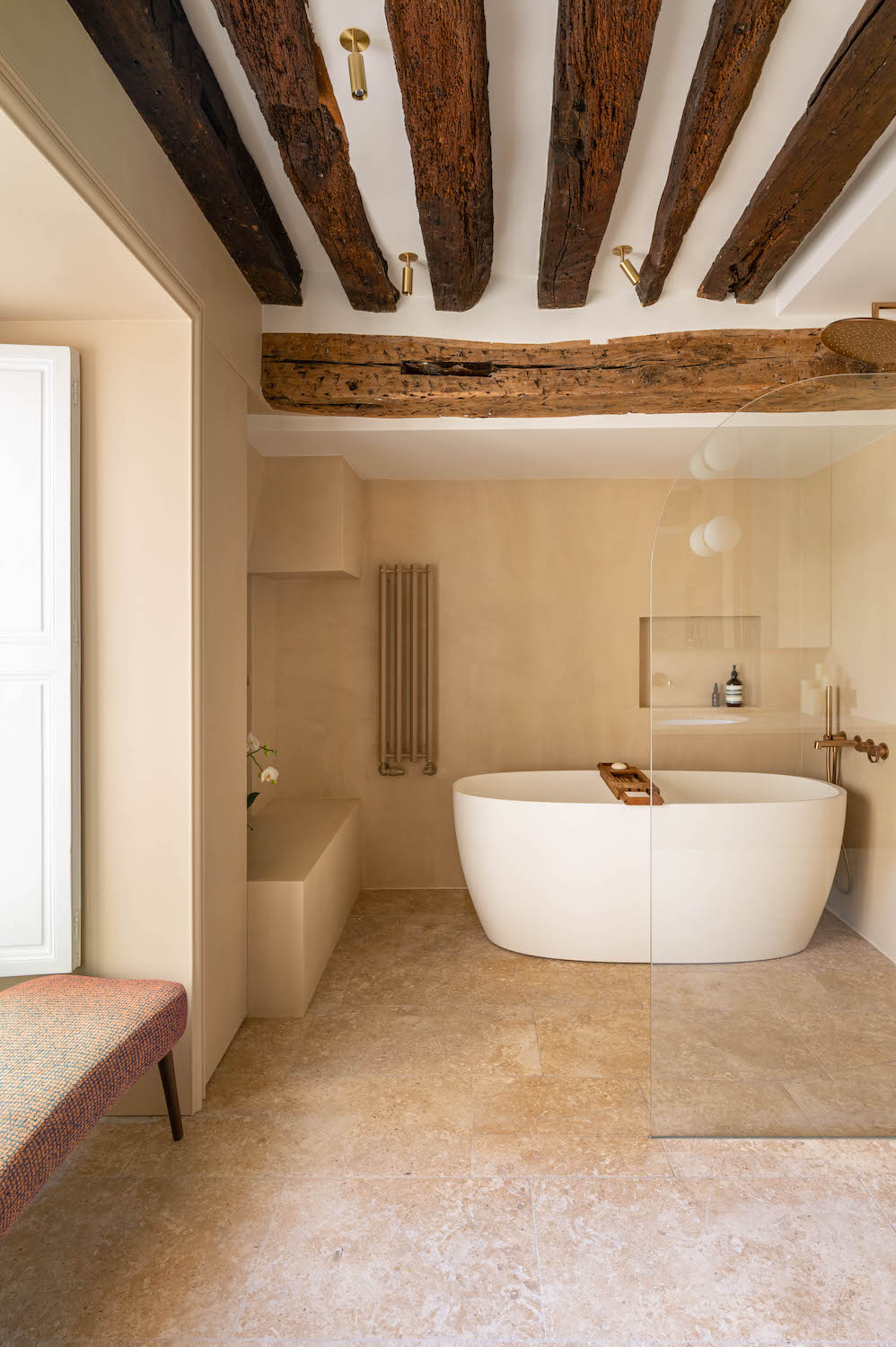
The original wall between the bedroom and the bathroom was treated in the same way, allowing for direct access and an enlarged space.
The guiding principles for the design: flexibility & space optimization.
As the building is listed with the Paris Heritage Authority, the authorization process and structural engineering studies were extensive. To carry out the modifications, the existing structure was lightened using construction systems compatible with the original wooden framework, ensuring a balanced distribution of loads.
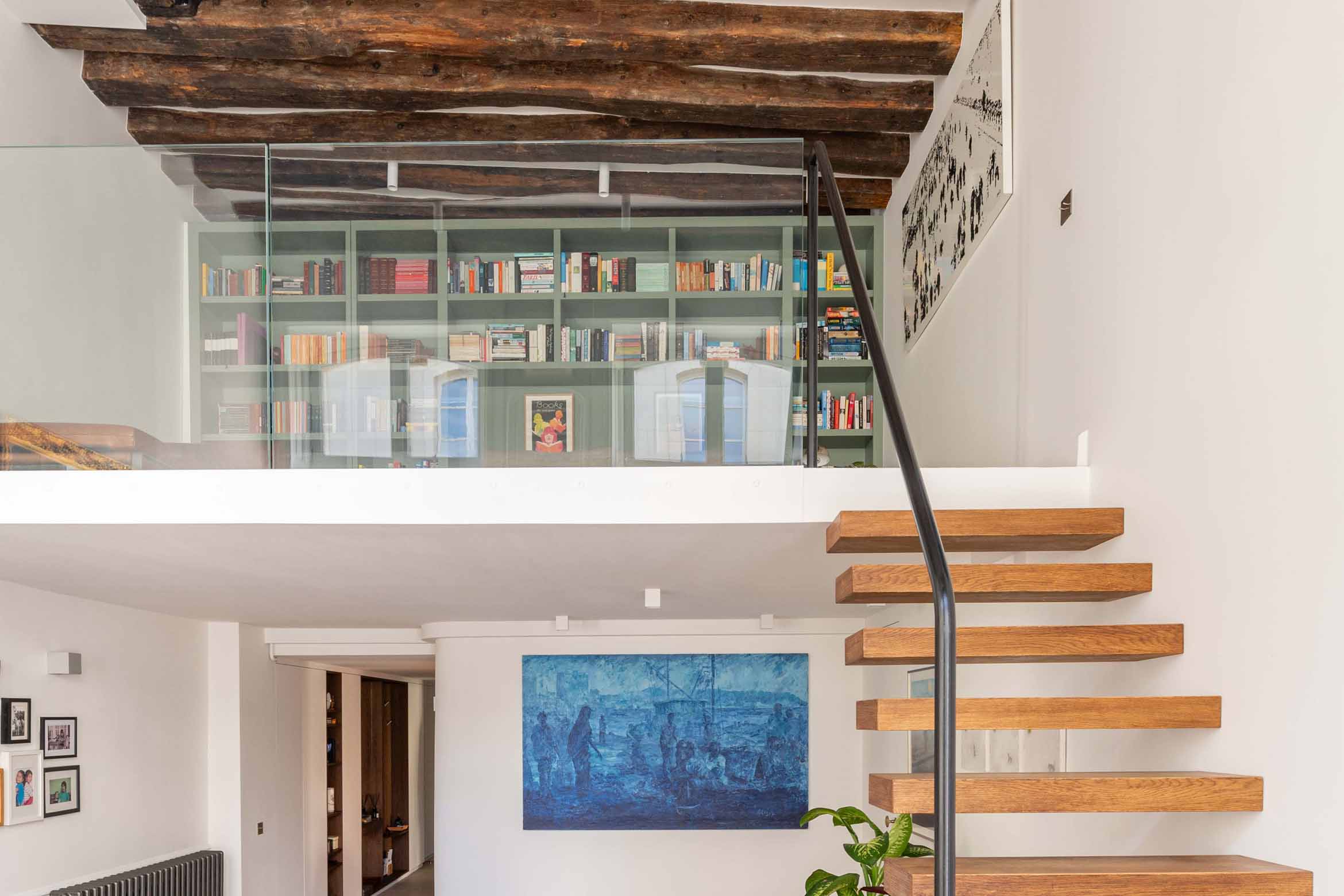
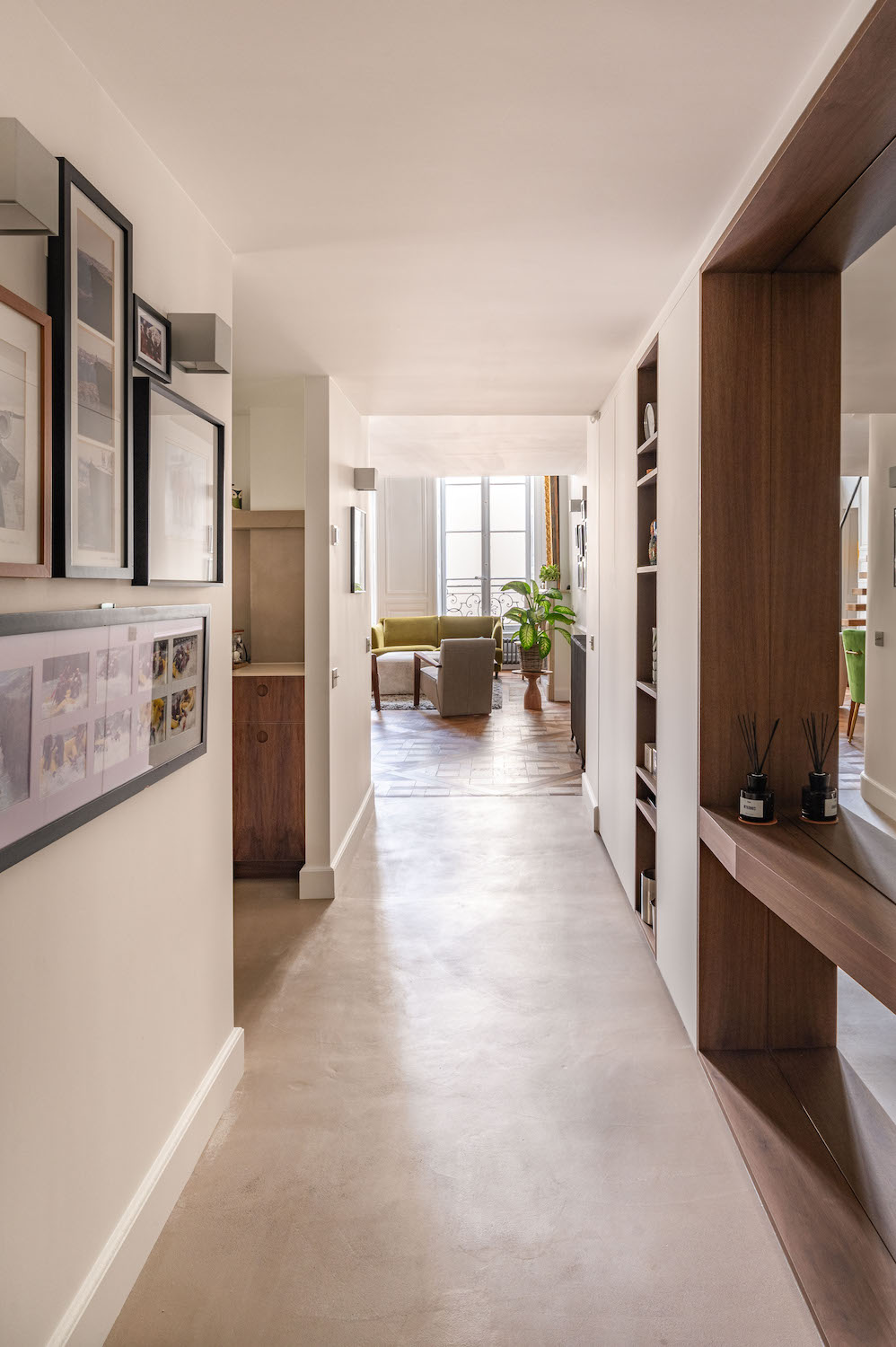
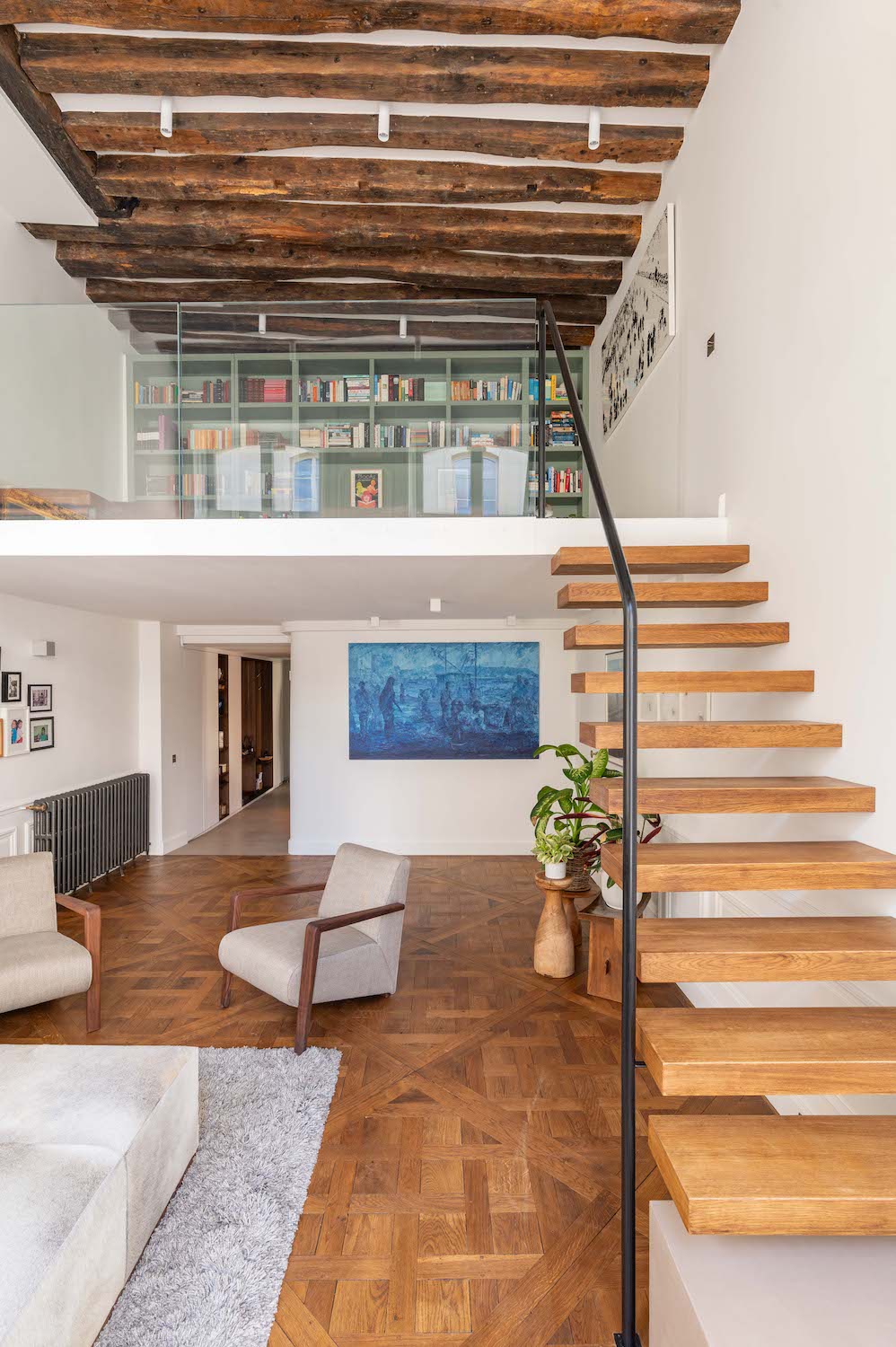
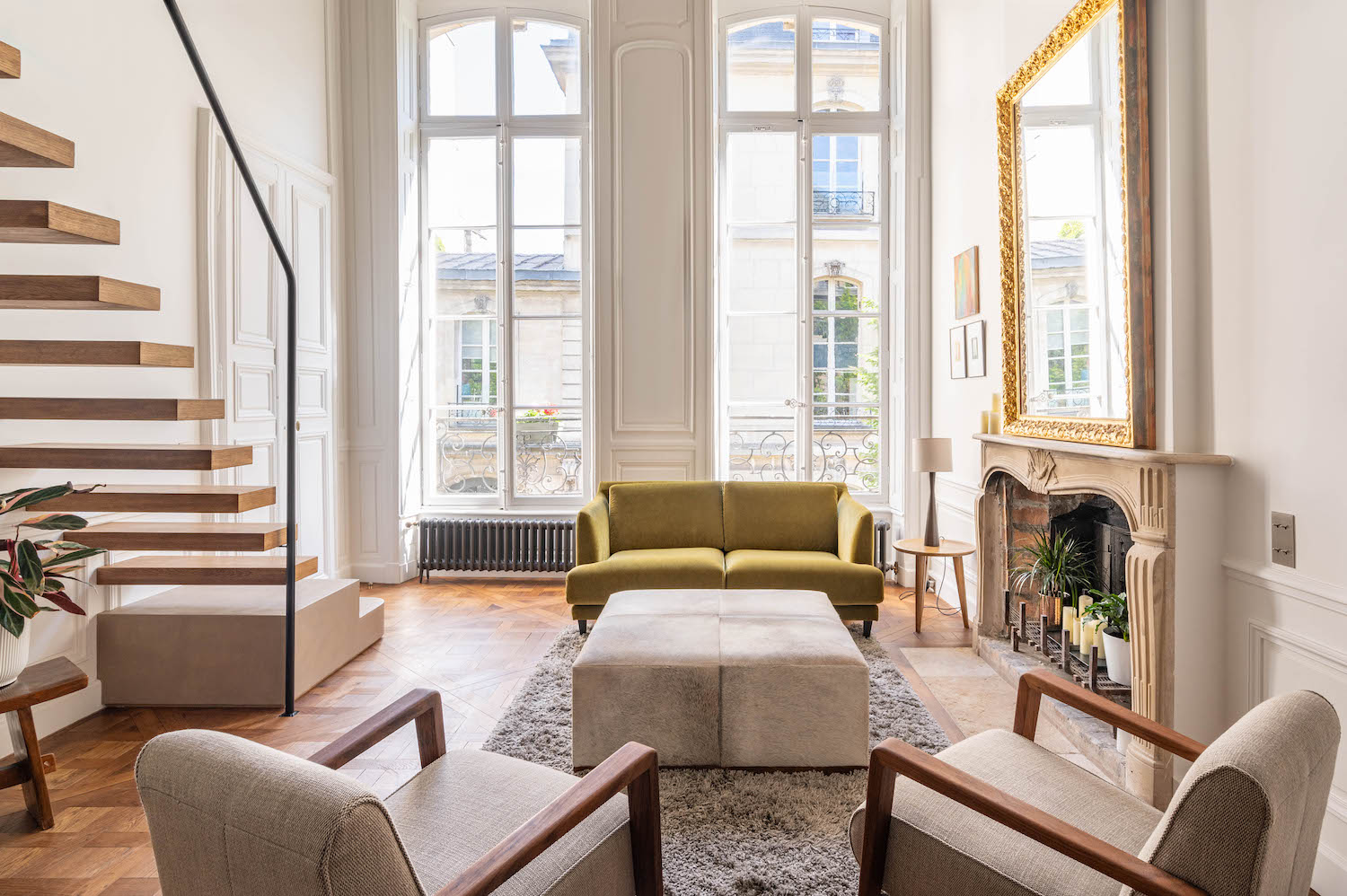
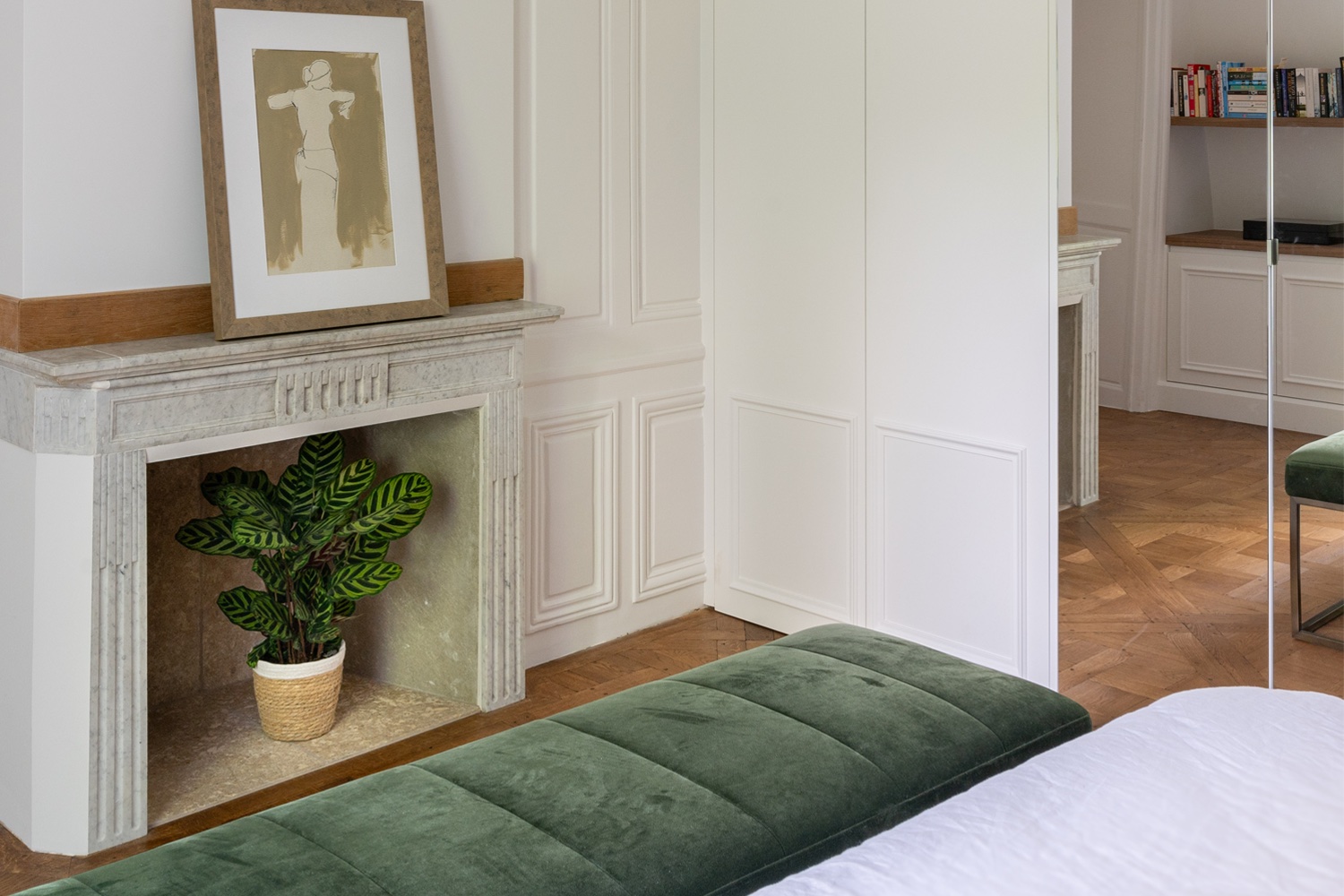
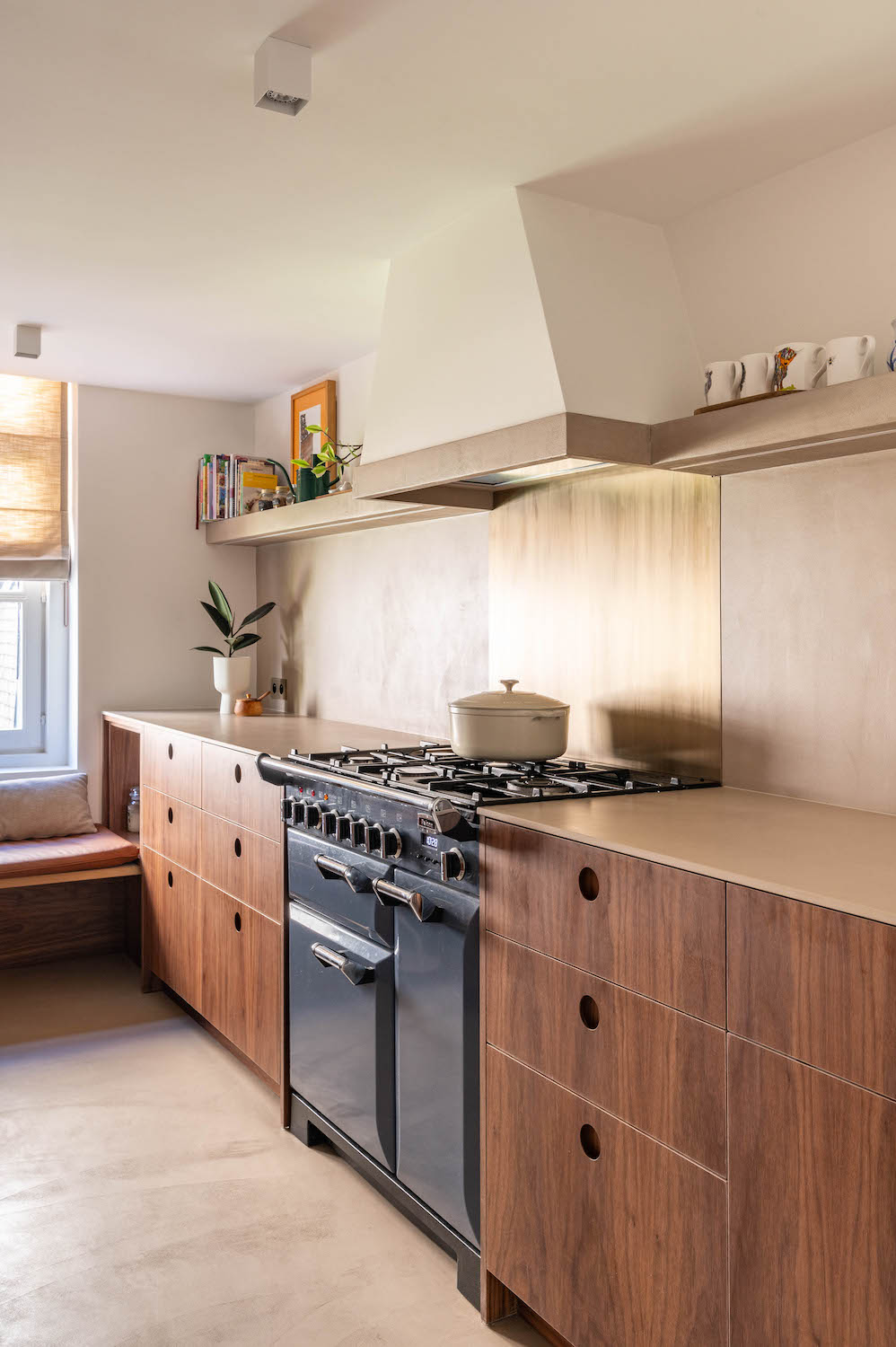
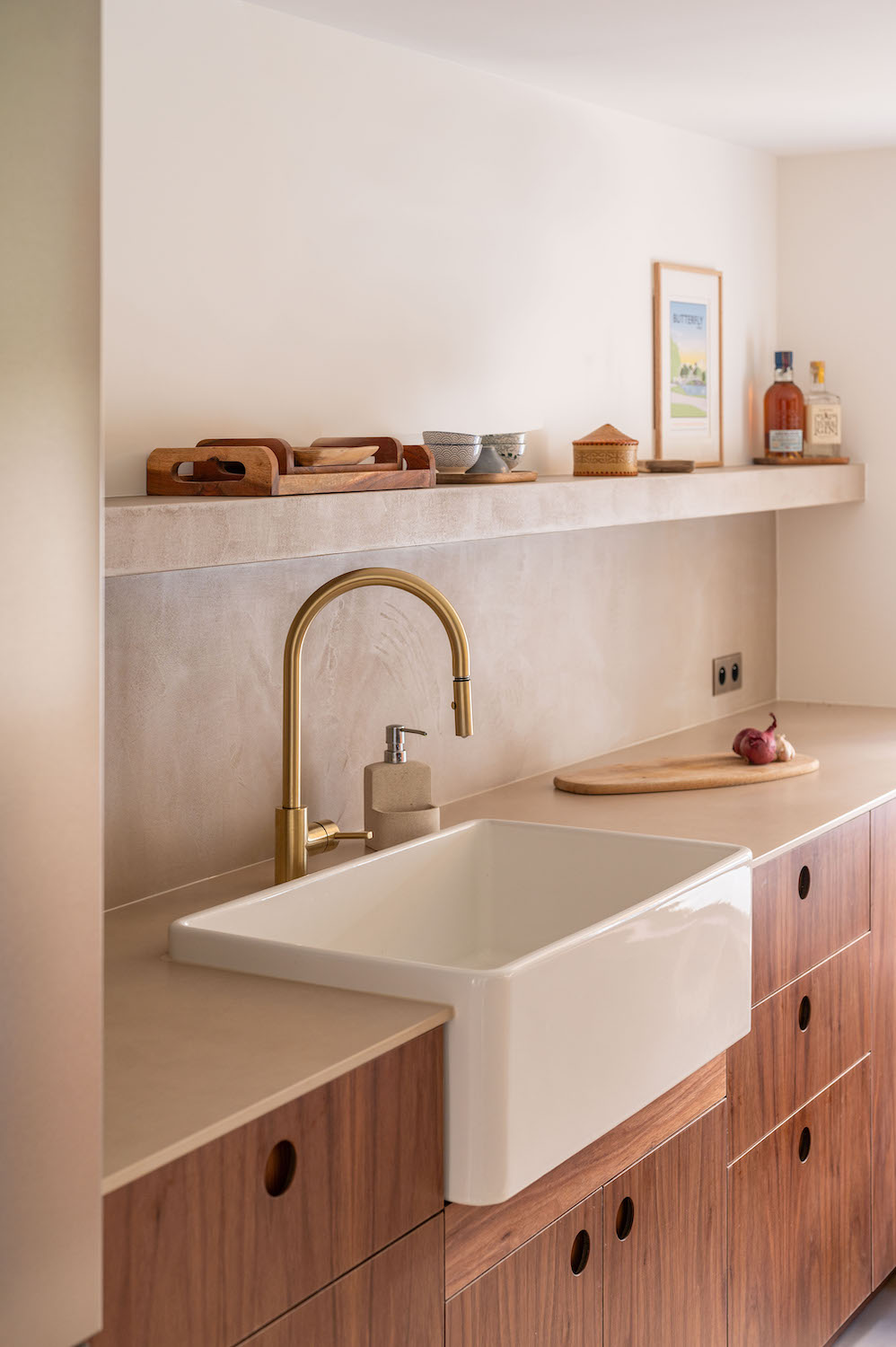
Once the structural project was approved and executed, a refined interior redesign was developed, responding to the client’s program while combining classical elements—exposed wooden structure, moldings, fireplace, and Versailles-style parquet flooring—with contemporary features such as the staircase, the glass mezzanine balustrade, bespoke joinery, polished concrete finishes in certain areas, and integrated lighting.
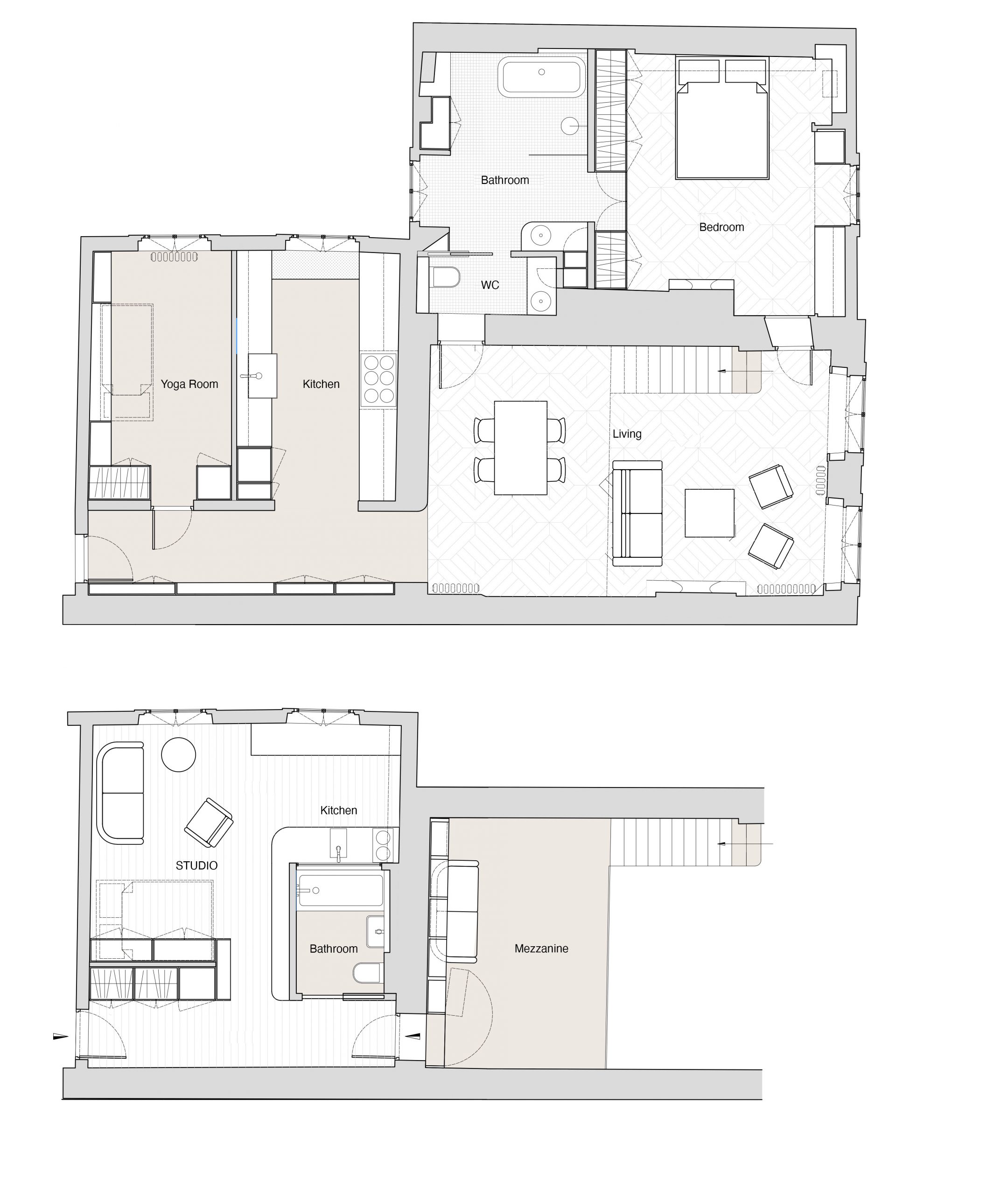
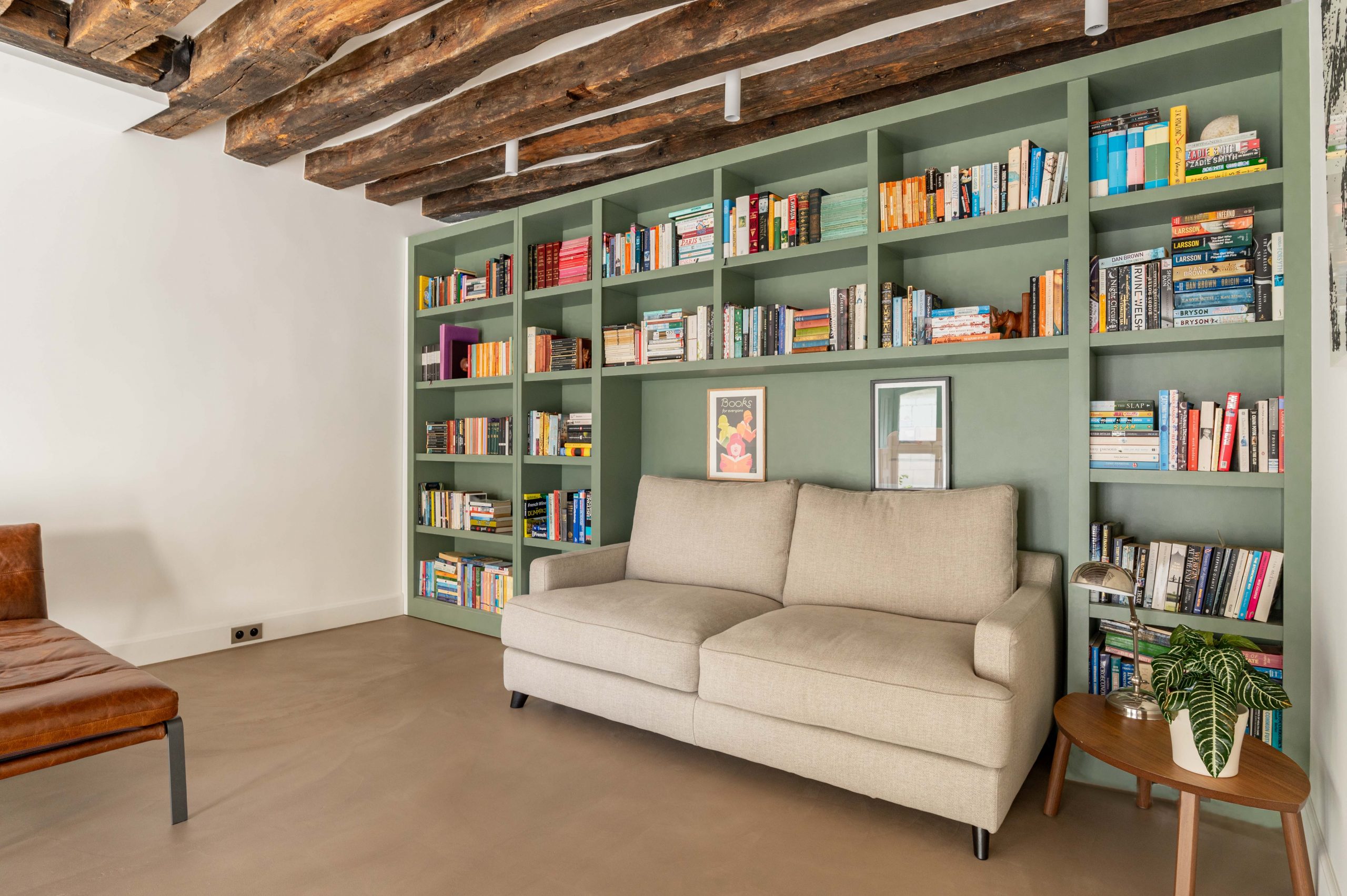
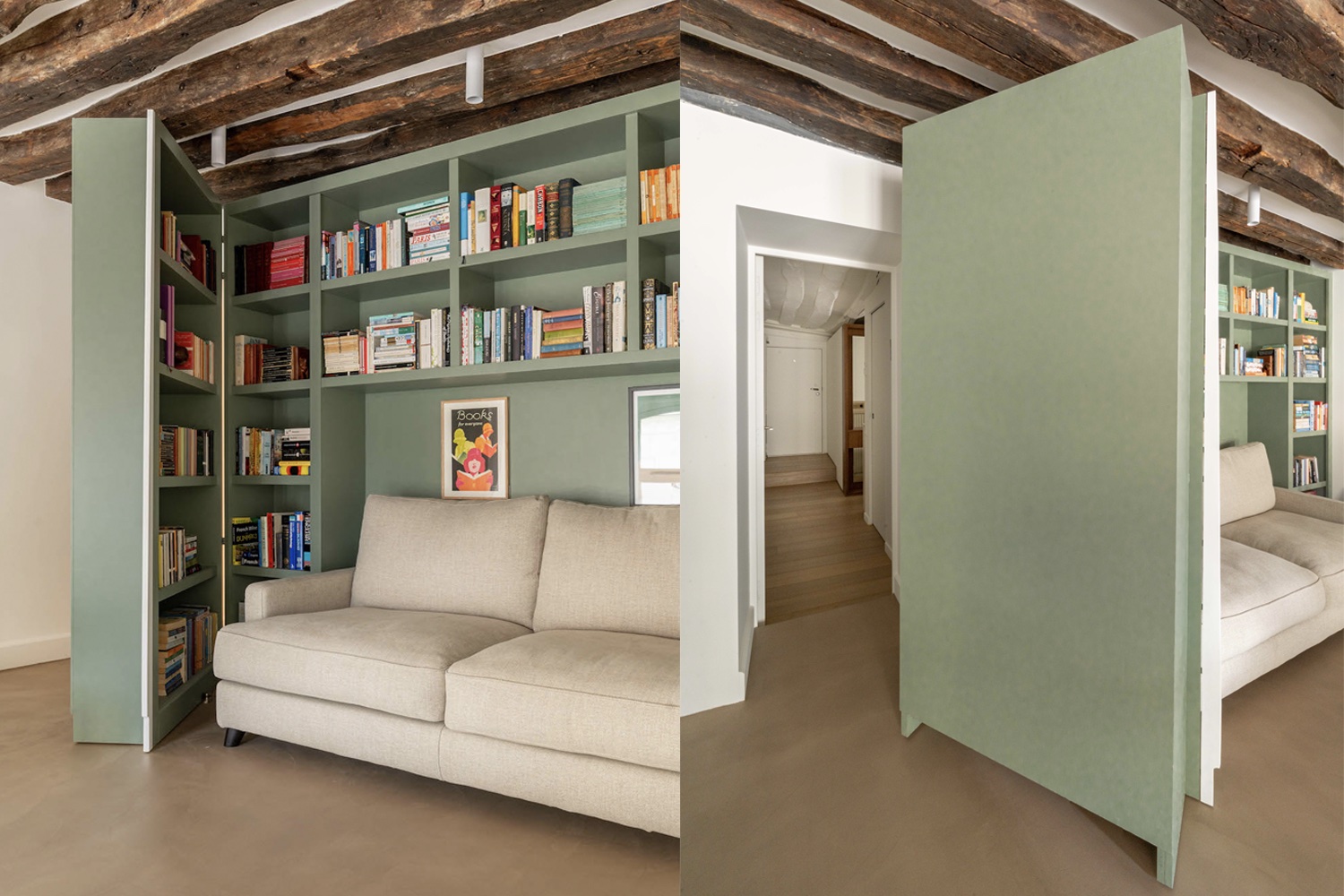
Access to the studio from the mezzanine is provided through a double door concealed within a bookshelf, while the original entrance from the building’s landing has been preserved.
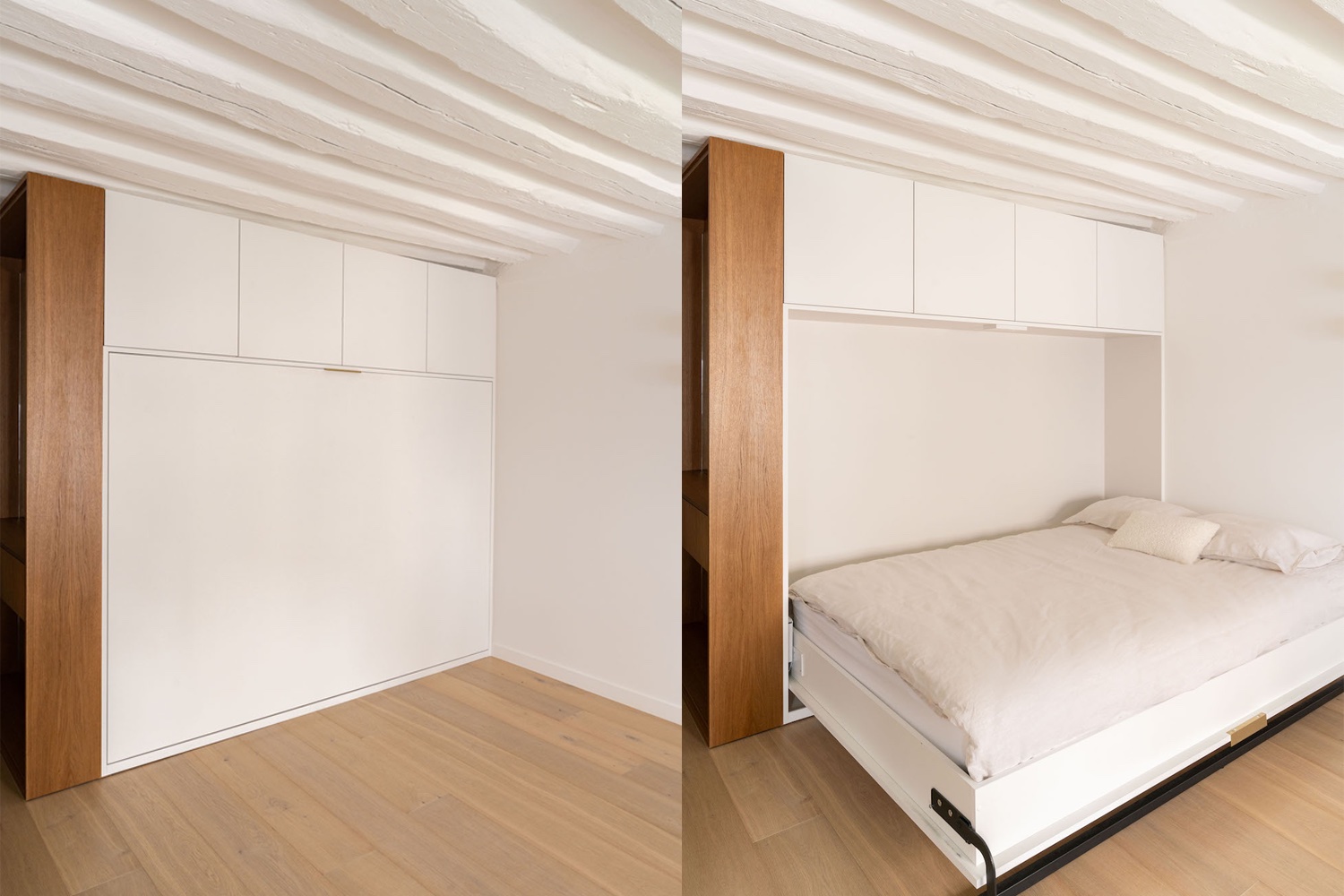
In the studio, a Murphy bed hidden within custom cabinetry allows the space to be fully opened during the day. The same principle was applied in the yoga room, where two integrated single beds can be unfolded as needed.
The design team consisted of two architects, while the construction team included an additional architect, a structural engineering office, and two execution teams: one for structural works and one for interior renovation.
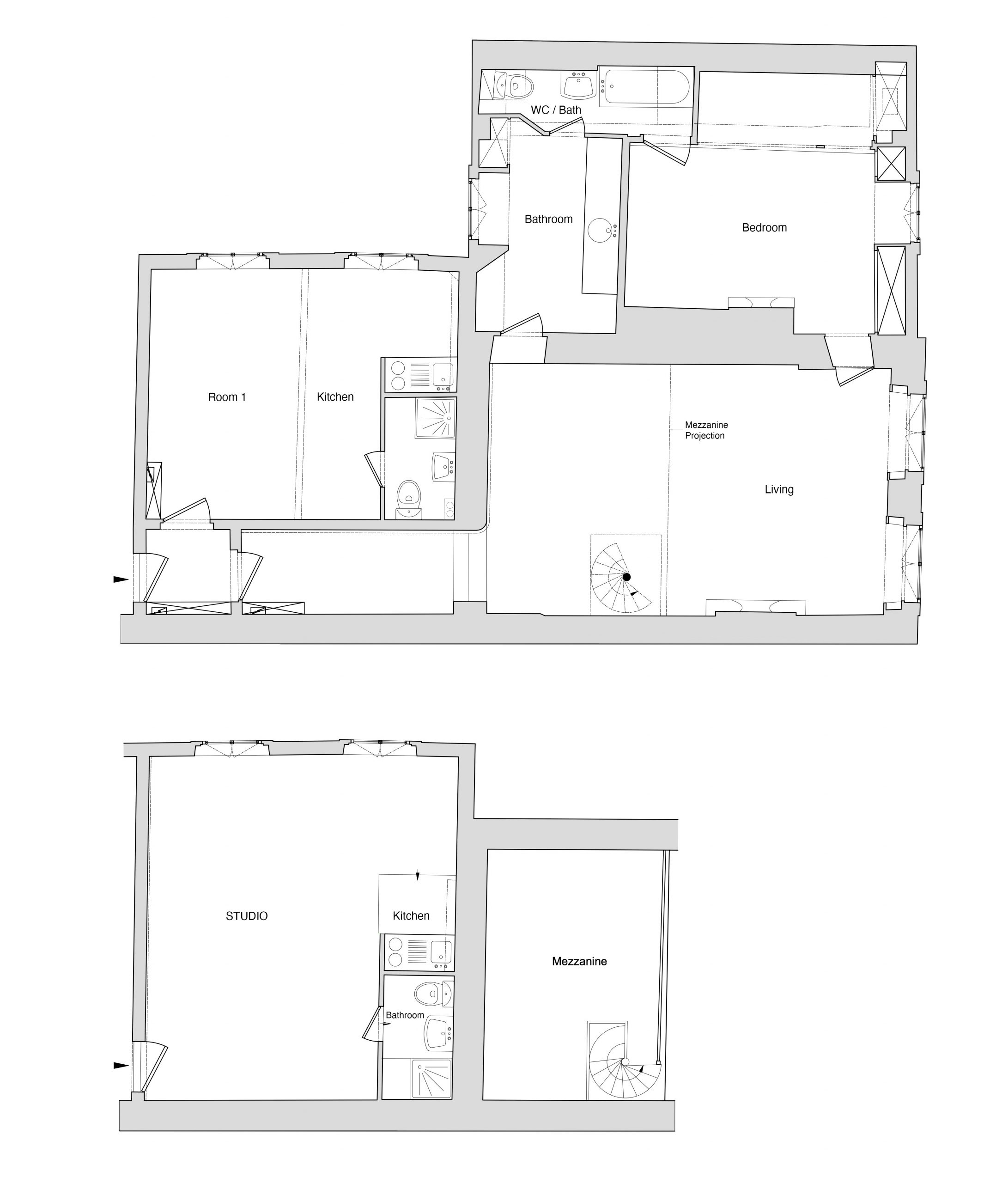
Before / After floor plans
1 : Floor plan before renovation
2 : Floor plan after refurbishment
To compare the 2 plans move the cursor from left to right